

This blog post was written by Head GMAU Ultimate Bo Instructor, Nathan Douglas. Read on to get some excellent tips from one of the GMAU’s amazing instructors!
How I Fell into the Martial Arts Rabbit Hole
It was the fall of 1998. I had just graduated high school and wanted to learn Taekwondo. This was because I’d always enjoyed watching martial-arts movies, and I thought learning some sort of fighting style would be fun. I wanted to learn how to spar, and I was drawn to the dynamic kicking techniques of Taekwondo.
I saw that the local YMCA offered a Taekwondo program, but I didn’t know what type it was and didn’t think to ask. I was just happy it was offered locally. I later found out that it was International Taekwondo, but that didn’t matter to me as I had no knowledge of any other styles.
My First Class
I was very nervous in my first class. The instructor was in his mid-20s and was a kind and funny student from the local technical school. He taught me how to make a fist that focused on my peace knuckles (a term I still use to this day to teach students which part of the hand first makes contact when punching).
As time went on, I learned various kicks, strikes, patterns, and sparring. I especially enjoyed sparring. I didn’t care for the patterns (poomsae) aspect of Taekwondo, which many students who train with me now might find funny because I’ve won awards in poomsae competitions.
My First Belt Test
Come that first winter, it was testing time. But I had no idea what a Taekwondo belt test looked like! And I was very nervous. In those days, there were no online sites such as YouTube, Facebook, or Instagram to check out what I was getting into.
My Instructor said he would be testing our class on behalf of his grandmaster. This made me a bit more comfortable because my Instructor was so kind and approachable. I was too nervous, however, to ask him any questions about the testing. And so my plan was simply to train every spare moment I had leading up to the test. (I still remember practicing the kicks I’d learned while working at my dad’s gas station, haha!)
On the day of the test, I was ridiculously nervous. I was tested in a small group that included many youths and a few of my instructor’s friends from his technical school. Everyone was polite, but I didn’t know any of them very well. So, I hadn’t chatted with any of them about what to expect during the exam. I only knew that I’d be tested on the basic strikes, blocks, and the pattern I’d learned. But I didn’t know what order I’d have to do them in or how long the test would be.
The test came and passed in the blink of an eye. I nervously waited for the end ceremony and, during a water break, I asked my instructor, “Did I pass?”
He laughed and said, “Um, yeah. You got 85%, which is fantastic!”
I was elated. I had just earned my yellow belt! It was an incredible feeling—a moment that, even though it was many years ago, I still recall with great clarity today. It was the beginning of a long and fantastic journey I had no idea I’d be taking.
Many years have passed since then. I’ve taken many Taekwondo rank tests since then. At the time of writing this article, I recently earned my 5th Dan Kukkiwon Black Belt and my 4th Dan in American Bojutsu. I’ve had victories, and I’ve had opportunities.
The 10 Tips to Help You Prepare for Belt Tests
Over the years I learned what works best for me in preparing for and succeeding in my belt tests. If I could have messaged my past self, I would have shared the following 10 tips (in no particular order) to help prepare and get ready to optimally perform during exams. But I’m happy to share them with you here and now so you can benefit from them.

by treenabeena
1. Enjoy the Moment
My first belt test was an incredible experience. In retrospect, that first victory made me laser focused on achieving my black belt. But even though I felt elated when I passed my first test, I should have taken more time to enjoy my advancement and the journey.
My martial arts story has been a never-ending road of challenges, fun, and satisfaction that I wish I had celebrated more during my color-belt progression. Unfortunately, the pure joy of learning was somewhat lost in my determination to keep progressing.
So, my recommendation to you is to take time to enjoy your journey and celebrate your progress and achievements. Take pictures and videos of yourself training and testing so you can look back on them and reflect with satisfaction. Think about making a scrapbook, on paper or social media.

by dizain
2. Know the Expectations
As you’ve seen, I went into my first belt test with no idea what the expectations of my performance were. All I knew was that my instructor told me I’d be testing.
Being invited to test was a clear signal that I was ready, but I should have been more curious. I should have asked the following questions:
- Is there a student manual to refer to?
- Is there a specific format the test follows?
- Will there be sparring?
- What should my techniques look like for the rank I’m testing for?
So, ask your instructor questions about the rank test you’re going to take. Focus on the questions listed above. This will help make your tests less stressful.

by pepscostudio
3. Relax
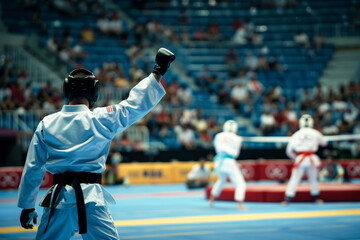
I used to get very nervous before an exam. I still do! But the more training and practice I put in before an exam, the more relaxed I am. And the more relaxed I am, the better my performance is.
As you progress to higher ranks, you may start to encounter exams that require heavy physical and mental fortitude. Being relaxed helps with both physical and mental fatigue. Being nervous consumes energy very fast, while being relaxed helps you strike harder and optimize how you expend your energy. As you train and rehearse for belt tests, try practicing relaxation techniques, too, to stay calm.
by spyrakot
4. Train Under the Same Conditions you Want to Perform With
One of my favorite quotes is, “We don’t rise to the level of our expectations, we fall to the level of our training.” This means that if your regular training is done with little effort and minimal repetitions, it’s unreasonable to expect you’ll perform at your peak when your body and mind are under stress.
Therefore, you should train under the same conditions you want to perform with. Consistently strike and block accurately while maintaining solid stances.
And repeat, repeat, repeat! Repetition is crucial for building your muscle memory.

by master1305
5. Assess and Improve Your Fitness Level
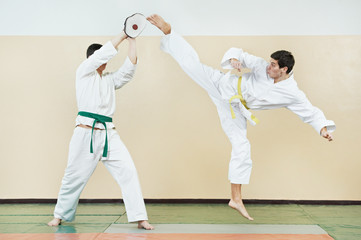
When I first started Taekwondo training, I was in pretty good shape. I breezed through my exam without tiring. But this eventually caught up to me as I got to higher belt ranks. I wasn’t conditioning myself for full-on belt tests that required me to punch and kick as hard as I could for long periods.
Any poomsae (or kata or pattern) done correctly will leave you winded, even after only performing it just once. Therefore, if an upcoming exam is going to be a long one, you must train for that so you don’t fade during the test.
by Kadmy
6. Do Mock Testing
Do you do mock tests? If not, I highly recommend that you do. This is because it’s a wonderful opportunity to get direct feedback from a higher ranking student or your instructor.
I mock test myself regularly. This includes filming myself for self-review and simulating exams.

by Syda Productions
7. Eat Sensibly Before You Test
My go-to meal before a belt test is usually something that’s relatively light and has carbs to energize me. Not an entire pizza that would bloat my belly and weigh me down. But a bowl of pasta or rice with some veggies works well.
If I have a morning test, I’ll have some toast with peanut butter on it for breakfast.
Avoid testing on an empty stomach because it may lead to lightheadedness. And an overfull stomach may lead to cramps, bloating, or worse!

by STOATPHOTO
8. Correct Mistakes
During my first black-belt test, I forgot to do a part of the Koryo sequence. How embarrassing! But I took a deep breath, collected my thoughts, redid the poomsae, and passed the test.
Remember–we’re all human. Mistakes will happen, so stay calm and either adjust your performance on the fly or, if it’s something you can’t recover from, redo the techniques, poomsae, or sequence. Your tester will appreciate it when you realize your mistake and self-correct it.

by Andrey Burmakin
9. Prepare Your Board Break
If you’re a Taekwondo student, you’ll find that board breaking is often done at the end of exams, which means you’ll probably be tired by then. So, prepare your challenging board break before the exam to set yourself up for success.
For my 5th Dan exam, I did a downward ridgehand strike on rebreakable tiles. I conditioned my hand by striking a heavy bag repeatedly for about four months before the test. The break still stung but I knew I’d easily be able to do it, even when tired

by Web Buttons Inc.
10. Tell Yourself You’re Ready!
Sometimes we tell ourselves we aren’t ready because we’re nervous and don’t want to go through the uncomfortable process of testing. But you’ll know whether you’re ready or not. And if you’re testing it means you’re ready because your instructor wouldn’t allow you to test if you’re not.
Remember–-the purpose of a belt test is to highlight all your training victories, and everyone wants you to succeed, especially your instructor!
I hope you find these tips for preparing for belt tests helpful. I wish you every success in your training and testing!
Global Martial Arts University

The GMAU has 6 major martial-arts courses for you to choose from.
Our highly qualified Instructors will keep you motivated and help you learn and grow in your martial arts journey! GMAU Instructors provide individually tailored instruction, correction, and advice to each of their students.
When you navigate to any of the courses on the GMAU website, you can click on the JOIN NOW FREE button to set up a FREE Beginner’s Account and start training IMMEDIATELY!







Great advice. It’s you against you!
Thank you.