
Karate, like many martial arts, is not just about physical techniques. It also embodies a deep philosophical aspect. This philosophy is rooted in the principles of respect, discipline, humility, and continuous self-improvement. This article examines the philosophical roots of Shotokan Karate.
Shotokan Karate, one of the most widely practiced martial arts in the world, is not just about physical prowess and self-defense. At its core, Shotokan embodies a deep philosophical framework that guides practitioners in their daily lives. It promotes a sense of discipline, respect, and ongoing self-improvement. To truly appreciate the essence of Shotokan, you must understand the philosophy that guides it.

The Roots of Shotokan Philosophy
Shotokan Karate was founded by Gichin Funakoshi, who is often referred to as the father of modern karate. Funakoshi was deeply influenced by both the physical and spiritual aspects of martial arts. He believed that karate should not only be a means of self-defense but also a way of life, promoting moral values and personal growth.
The Shotokan Philosophy – the Nijū Kun
Funakoshi distilled the philosophy of Shotokan into twenty guiding principles known as the “Nijū kun.” These principles emphasize the importance of humility, respect, and the pursuit of perfection. They serve as a moral compass for practitioners, encouraging them to live their lives with integrity and honor.
The Core Principles of Shotokan – the Dojo Kun
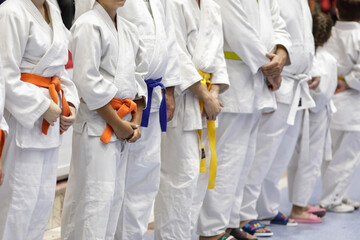
In addition to the Nijū kun, Shotokan practitioners adhere to the Dojo Kun, a set of five maxims recited at the end of each training session. These maxims reinforce the core values of the art and remind students of their commitment to personal and communal excellence:
- Seek Perfection of Character
- Be Faithful
- Endeavor
- Respect Others
- Refrain from Violent Behavior
The Dojo Kun Explained
The repetition of the Dojo Kun serves as a constant reminder of the ethical framework within which karate is practiced. It encourages students to reflect on their behavior and strive to embody these principles in their daily lives. Here’s what each one means:
Seek Perfection of Character (Jinkaku Kansei ni Tsutomuru Koto)
The ultimate goal of Shotokan is to become a skilled fighter and strive for personal excellence in all aspects of life. Practitioners are encouraged to cultivate virtues such as honesty, compassion, and courage.
Be Faithful (Makoto no Michi o Mamoru Koto)
Loyalty and faithfulness are central to the practice of Shotokan. This extends beyond the dojo, urging practitioners to be reliable and trustworthy individuals in their personal and professional lives.
Endeavor (Doryoku no Seishin o Yashinau Koto)
Shotokan emphasizes the importance of hard work and perseverance. Success in karate, as in life, comes through consistent effort and dedication. Practitioners learn to embrace challenges and persist through difficulties.
Respect Others (Reigi o Omonzuru Koto)
Respect is a cornerstone of Shotokan philosophy. This principle teaches practitioners to show respect to their instructors, fellow students, and everyone they encounter. It encourages a sense of community and mutual support within the dojo and beyond.
Refrain from Violent Behavior (Keki no Yū o Imashimuru Koto)
While karate equips individuals with the skills to defend themselves, it also instills a strong sense of responsibility. Practitioners are taught to avoid unnecessary conflict and use their skills only for self-defense or the defense of others.
Integrating Philosophy with Practice
In Shotokan, the practice of karate extends beyond the physical techniques. Kata, or forms, are a vital component of training, serving as a moving meditation that embodies the philosophical aspects of the art. Through the repetition of kata, practitioners internalize the principles of discipline, focus, and mindfulness.
Moreover, the relationship between sensei (teacher) and student is deeply rooted in respect and mutual learning. This dynamic fosters an environment where philosophical teachings are imparted through example and mentorship, creating a holistic approach to martial-arts training.
Final Thoughts
The philosophy of Shotokan Karate offers a profound framework for personal development and ethical living. By embracing principles such as respect, perseverance, and humility, practitioners are trained to defend themselves and navigate life’s challenges with integrity and wisdom. Shotokan is more than a martial art; it is a way of life that inspires continuous growth and the pursuit of excellence in all endeavors.
The Global Martial Arts University’s Shotokan Karate Course

Are you interested in learning traditional karate? If so, check out our AMAZING Shotokan Karate program!
Set up a FREE Beginner’s Account and start training TODAY!








is there a way to learn any shotokan karate, online?
Yes, absolutely! Please see: https://globalmartialarts.university/course/shotokankarate/