Self-Defense

Situational Awareness: The First Skill of Self-Defense

When people think about self-defense, they often picture punches, kicks, or escaping from an attacker. While physical skills certainly have their place, experienced instructors know that effective self-defense begins long before a confrontation ever occurs. It begins with awareness: paying attention to your surroundings, recognizing potential risks, and making decisions that reduce the likelihood of becoming a target in the first place. Situational awareness isn’t about living in fear or expecting danger around every corner. It’s about developing the habit of being present, observant, and prepared. Many times, that awareness can help you avoid problems altogether, making it one of the most valuable self-defense skills you’ll ever develop.
Self-Defense Training vs. Sport Martial Arts: Key Differences

Two students begin martial arts classes on the same day. Both learn punches, kicks, blocks, and footwork. Both train diligently and improve their physical abilities. Yet after several years, their skills may look surprisingly different. Many martial arts share common techniques, however, the purpose behind the training often shapes the way those techniques are practiced. Some schools focus primarily on competition, while others emphasize practical self-defense. Neither approach is inherently better, they simply prepare students for different situations. Understanding those differences can help you choose training that best aligns with your personal goals.

The 3 Most Common Street Attacks & How to Defend Them

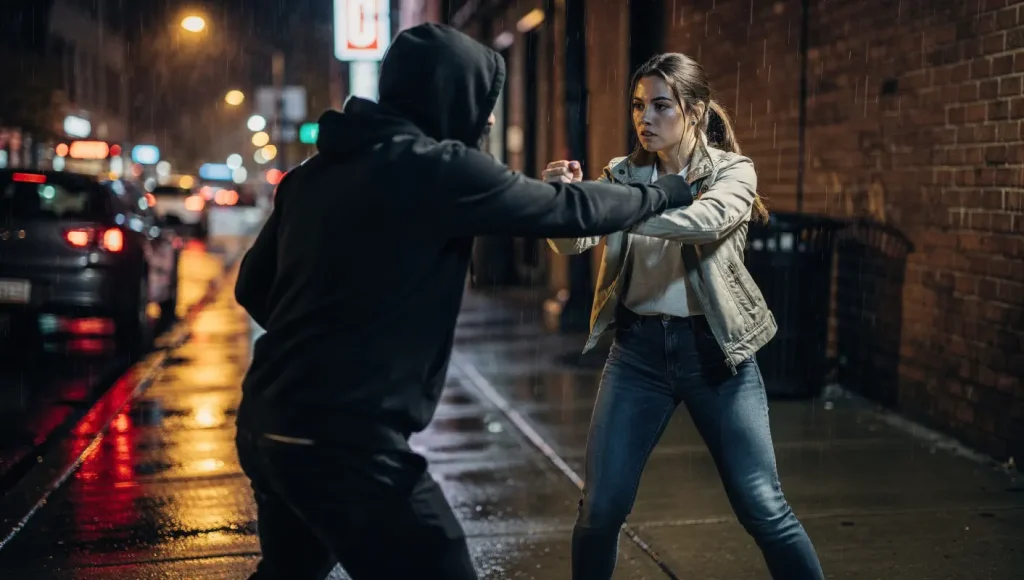
Woman Defending Against Street Attacker

From an original GMAU blog article by Joel Williams; updated and reposted June 2026. You train hard and practice a lot. But are you actually “ready” for a real-life physical confrontation? Maybe yes, maybe no. There’s really only one way to know for sure, right? That’s to be in a situation where you have to actually …

The 3 Most Common Street Attacks & How to Defend Them Read More »

Five Practical Situations Where Krav Maga Excels

GMAU Krav Maga Program Seal

Krav Maga – military combatives originally developed for the Israel Defense Forces (IDF) – has been modified as an effective, and popular, civilian self-protection system. Krav Maga is known for its training to prepare individuals for specific scenarios. Those scenarios are listed and described in this blog post.

Muay Thai Clinching: The Plum

Muay Thai Logo

Attacking and defending “in the clinch” is fundamental to Muay Thai. Unlike Western boxing, and other kickboxing styles, grappling with an opponent in Muay Thai is legal. The Plum (a.k.a., Muay Thai Clinch, Muay Thai Plum, Thai Clinch, Double Collar Tie) is a clinch position where one fighter wraps both hands behind the neck and pinches their forearms in front of the neck of an opponent. This technique can be used to control the posture and movement of, set up knee strikes to, and trip or throw an opponent. Read on to learn more about The Plum!

Krav Maga Grappling: The Side Clinch

GMAU Krav Maga Program Seal

In combat sports, or self-defense, “clinching” refers to a category of close-quarters techniques. There are multiple types of clinches: the Muay Thai plumb, the body lock, etc. All of these are used in a standing grappling situation and can be used offensively or defensively. The most common clinch taught in Krav Maga is the “Side Clinch”. This particular technique can be very effective in controlling (and defending oneself against) an attacker and useful in setting up combatives (offensive maneuvers), such as the groin kick or knee strikes. Read on to learn more about the Krav Maga Side Clinch!