
Krav Maga – military combatives originally developed for the Israel Defense Forces (IDF) – has been modified as an effective, and popular, civilian self-protection system. Krav Maga is known for its training to prepare individuals for specific scenarios. Some of those scenarios are described in this article.
Krav Maga, an Israeli martial art focused on real-world scenarios, provides practical defenses against various attacks. Such attacks are listed in the following categories:

Image Source: Adobe Stock
by Straight8Stock
Defense Against Grabs and Holds: Defending against grabs and holds involves quick, decisive strikes to vulnerable areas (like the eyes, throat, or groin) combined with leverage techniques to break free from the holds, followed by counterattacks.

Image Source: Adobe Stock
by guruXOX
Defense Against Chokes: Defending against chokes emphasizes immediate action to clear the airway, typically by using the body’s natural reactions (such as plucking at the attacker’s hands) combined with aggressive counterstrikes to disable the attacker.
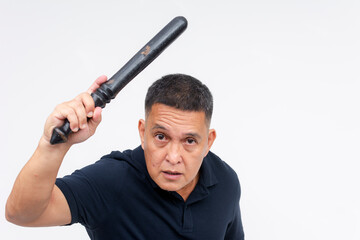
Image Source: Adobe Stock
by Mdv Edwards
Defense Against Blunt Objects: Defending against sticks or other blunt objects focuses on moving off the line of attack, deflecting the weapon, and closing the distance to neutralize the attacker using strikes and disarming techniques.

Image Source: Adobe Stock
by New Africa
Defense Against Knives: Defending against knives prioritizes controlling the knife-wielding arm, maintaining distance or closing in quickly to neutralize the threat, and using strikes to incapacitate the attacker while attempting to disarm (take the knife away from) them.
The acronym RCAT is used to teach students to: redirect the weapon, control the weapon, attack the attacker, and take away the weapon.
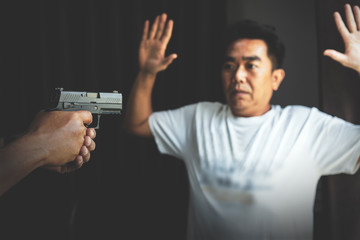
Image Source: Adobe Stock
by Natnan
Defense Against Firearms: Defense against firearms involves redirecting the line of fire, controlling the weapon, and disarming the attacker, all while using aggressive counterattacks to ensure the threat is neutralized — again, using the RCAT method.
Each category of attacks listed above involves training (and many repetitions of practicing) clusters of techniques used to deal with the specific threat.
Krav Maga emphasizes simplicity, efficiency, and the use of the body’s natural responses to defend effectively in high-stress situations.
As such, Krav Maga is known for utilizing a small set of “principles” to drive responses to threats, as opposed to numerous techniques where the individual being attacked has to memorize very specific details to deal with these threats.
Krav Maga uses a standard, limited set of reactions to deal with multiple, specific threats. For example, the entry to close the distance and control an attacker who is swinging a blunt object vertically, horizontally, or using a backhand stroke (i.e., swing-miss-swing) is exactly the same, with minor differences in how the technique ends.
The Global Martial Arts University (GMAU) Krav Maga Course

GMAU has a comprehensive Krav Maga progarm and a course for training future Krav Maga instructors.
Check out this Krav Maga Instructor Course Overview and these Student Testimonials.
Set up a FREE Beginner’s Account and start training TODAY!