

In traditional martial arts, it’s important to know the history of your style and the lineage of its teachers. This blog article highlights prominent Shotokan Karate masters who have left an indelible mark around the world. Read on as we pay homage to their unparalleled dedication, wisdom, and mastery.
In the world of martial arts, Shotokan Karate stands out as a style that emphasizes self-discipline, precision, and tradition.
Behind the art’s grace and power lie the indelible contributions of its masters—figures whose names echo through many dojos, revered for their dedication to the art and their profound influence on its evolution.
From the serene dojos of Japan to the bustling academies around the globe, the legacy of Shotokan Karate masters continues to inspire and shape the journey of countless practitioners. Let’s learn more about the lives and legacies of several iconic figures of Shotokan.
Gichin Funakoshi (1868-1957)

Gichin Funakoshi, the founder of Shotokan Karate, is one of the most influential figures in karate history. He was born in 1868 in Okinawa, Japan, and later moved to mainland Japan to introduce karate to the Japanese population.
Funakoshi’s efforts helped establish karate as a recognized martial art in Japan and eventually worldwide. His teachings emphasized the importance of character development, humility, and respect, alongside physical training. His legacy continues to influence martial artists around the world.
Masatoshi Nakayama (1913-1987)

Masatoshi Nakayama played a crucial role in popularizing Shotokan Karate globally through his teachings and publications. He was a prominent figure in the world of karate, particularly Shotokan.
He was born in 1913 in Yamaguchi Prefecture, Japan, and began training in karate under Gichin Funakoshi in the 1930s. He became one of Funakoshi’s top students and played a significant role in the development and spread of Shotokan Karate. Nakayama was instrumental in organizing the Japan Karate Association (JKA) in 1949, which became one of the most influential karate organizations globally. He served as the chief instructor of the JKA and played a pivotal role in standardizing karate techniques, curriculum, and teaching methods.
Masatoshi Nakayama authored several books on karate, including instructional manuals that became widely used references for karate practitioners worldwide. He emphasized the importance of proper technique, training methodology, and the philosophical aspects of karate. Nakayama’s contributions to the global karate community are significant, and his teachings continue to influence practitioners and instructors around the world. He passed away in 1987, leaving behind a lasting legacy in the world of martial arts.
Hidetaka Nishiyama (1928-2008)

Hidetaka Nishiyama was renowned for his contributions to Shotokan Karate and his efforts in promoting it internationally. Born in 1928 in Japan, Nishiyama began his martial arts training at a young age. Like Nakayama, he studied under Gichin Funakoshi, the founder of Shotokan Karate, and later became one of his top students.
Nishiyama moved to the United States in the 1960s and played a significant role in popularizing karate in America. He co-founded the American Amateur Karate Federation (AAKF) and the International Traditional Karate Federation (ITKF), organizations dedicated to promoting traditional karate.
Throughout his life, Nishiyama emphasized the importance of proper technique, fundamentals, and the philosophical aspects of karate. He authored several books and instructional materials on karate, contributing to the body of knowledge within the martial arts community. Nishiyama’s impact on the spread and development of karate, particularly in the West, is profound. He passed away in 2008, but his teachings and legacy continue to influence karate practitioners and instructors worldwide.
Taiji Kase (1929-2004)
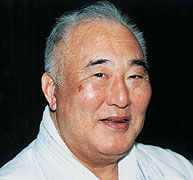
Image Source:
Wikimedia Commons
Taiji Kase was a highly respected Shotokan Karate master known for his technical expertise and profound understanding of karate principles. Born in 1929 in Japan, Kase began his karate training at a young age and became a student of Gichin Funakoshi.
Kase played a significant role in the development and popularization of karate in Europe. He moved to France in 1967 and became one of the leading figures in the European karate community.
Kase’s teaching style emphasized fluid movement, speed, and precise technique, which earned him recognition as one of the foremost authorities on Shotokan Karate. Throughout his career, he traveled extensively, conducting seminars and workshops to share his knowledge and expertise with karate practitioners around the world. He also authored several books and instructional materials on karate.
Kase’s contributions to the spread of Shotokan Karate and his impact on the development of karate as a martial art are significant. He passed away in 2004, leaving behind a legacy of excellence and dedication to the art of karate.
Hirokazu Kanazawa (1931-2019)

Image Source:
karateworld.info
Hirokazu Kanazawa was a renowned karateka (karate practitioner) who played a significant role in the popularization and development of Shotokan Karate. Born in 1931 in Japan, Kanazawa began his martial arts training at an early age and quickly excelled in the art of karate. He also trained under the legendary Gichin Funakoshi and later under Masatoshi Nakayama. He eventually became one of the most prominent disciples of Nakayama.
In the 1960s, Kanazawa traveled to Hawaii and later to Europe, where he contributed significantly to the spread of Shotokan Karate internationally. He established the Shotokan Karate International Federation (SKIF) in 1977, which became one of the largest and most influential Shotokan organizations in the world.
Kanazawa was known for his exceptional technical skill, precise movements, and deep understanding of karate principles. He emphasized the importance of proper technique, mental focus, and the philosophical aspects of martial arts training. Throughout his life, he authored numerous books and instructional materials on karate, furthering the understanding and practice of Shotokan Karate worldwide.
Kanazawa’s legacy continues to inspire karate practitioners and instructors globally. He passed away in 2019, leaving behind a lasting impact on the world of martial arts.
Teruyuki Okazaki (1931-2020)
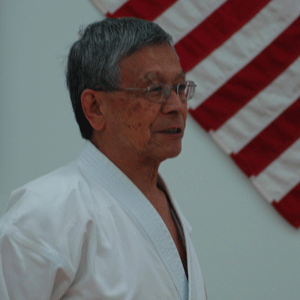
Image Source:
Wikimedia Commons
Teruyuki Okazaki was a highly respected karate master and instructor who made significant contributions to the spread and development of Shotokan Karate internationally. Born in 1931 in Japan, Okazaki began his karate training at a young age and eventually became one of the top students of Gichin Funakoshi.
In the 1960s, Okazaki moved to the United States, where he played a pivotal role in popularizing karate in North America. He co-founded the International Shotokan Karate Federation (ISKF) in 1977, which became one of the largest and most influential Shotokan organizations in the world.
Okazaki’s teaching style emphasized the traditional principles of Shotokan Karate, including strong stances, precise techniques, and mental discipline. He was known for his deep understanding of karate and his ability to impart knowledge effectively to his students. Throughout his life, Okazaki traveled extensively, conducting seminars and workshops to share his expertise with karate practitioners worldwide. He also authored several books and instructional materials on karate, contributing to the body of knowledge within the martial arts community.
Okazaki’s dedication to karate and his efforts to promote the art internationally have left a lasting impact on the world of martial arts. He passed away in 2020.
Keinosuke Enoeda (1935-2003)

Keinosuke Enoeda, also known as “The Tiger,” was a highly influential karateka who played a significant role in the development and spread of Shotokan Karate, particularly in the United Kingdom. Born in Japan in 1935, Enoeda began his karate training under the renowned Shotokan master, Masatoshi Nakayama.
In the 1960s, Enoeda was dispatched to the United Kingdom by the Japan Karate Association (JKA) to help spread Shotokan Karate internationally. He became the chief instructor of the JKA in the UK and played a pivotal role in popularizing karate throughout the country.
Enoeda’s dynamic and powerful technique earned him the nickname “The Tiger.” He was known for his strong punches, kicks, and fierce determination both in training and competition. Under his guidance, many British karateka flourished and became influential figures in their own right.
Enoeda’s legacy in the UK karate community is profound. He inspired countless students and instructors and left an indelible mark on the development of Shotokan Karate in Britain. Enoeda passed away in 2003, but his teachings and contributions continue to be remembered and respected.
These masters all made significant contributions to the practice, teaching, and promotion of Shotokan Karate worldwide.
The Global Martial Arts Shotokan Karate Course
Would you like to learn Shotokan Karate from the comfort of your home? If so, check out the GMAU Shotokan Karate course.
Set up a FREE Beginner’s Account and start training TODAY!






I remember meeting Hirokazu Kanezawa in a dojo in Upminster. He had been invited by Vernon Frederick Bell our Black belt instructor who was also a Dan in judo. Kanazawa moved along the line asking us to grip his wrists. He then demonstrated the escape. Twisting his hands upwards and outwards. I stupidly gripped a bit too hard for his liking. He smiled. Escaped then chopped me on the side of my neck and judo threw me after stepping in to do that throw which I think is called Taitoshi? I never got a Dan in judo or Karate but will never forget Kanazawa’s high kicks. Or his way to get out of wrist grips. Its all so long ago and memories fade but his amazing skill is indelibly imprinted on my memory.
This kind of information is not usually taught to students, and is usually left for students to research for themselves. Any chance these articles could be available as a library on the website. 👍
Hi Richard,
Apologies for the late reply to your message. The GMAU blog serves as our library of useful information. But your point is well taken that a library would be valuable to have on the GMAU student site. We appreciate this suggestion and we’ve put it on our list of suggested upgrades to the site.
Thanks and have a great day!
– The GMAU Team